Telecom operators come to Securna for two things. (1) Wholesale SD-WAN-as-a-Service for the SME segment — Peplink CPEs at every customer site, plus InControl (ICVA) and FusionHub hosted in your own datacentre. The MRR stays yours; Securna engineers the platform. (2) Carrier infrastructure — tower-site backhaul, microsite cellular, NOC connectivity, microwave middle-mile.
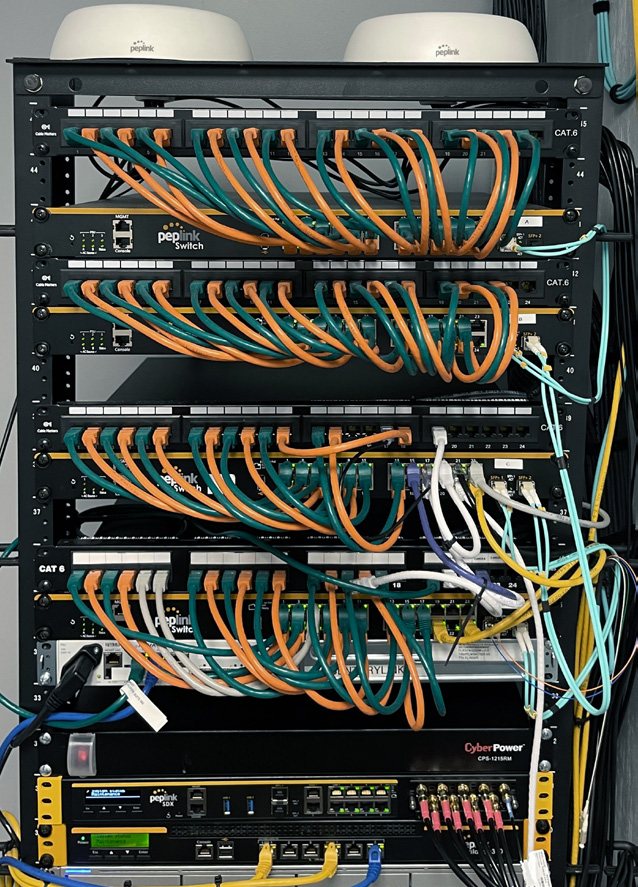
The wholesale SD-WAN-as-a-Service is how most telcos engage Securna first — it's an MRR line against your existing SME book. The infrastructure plays then follow naturally for your towers and your NOC.
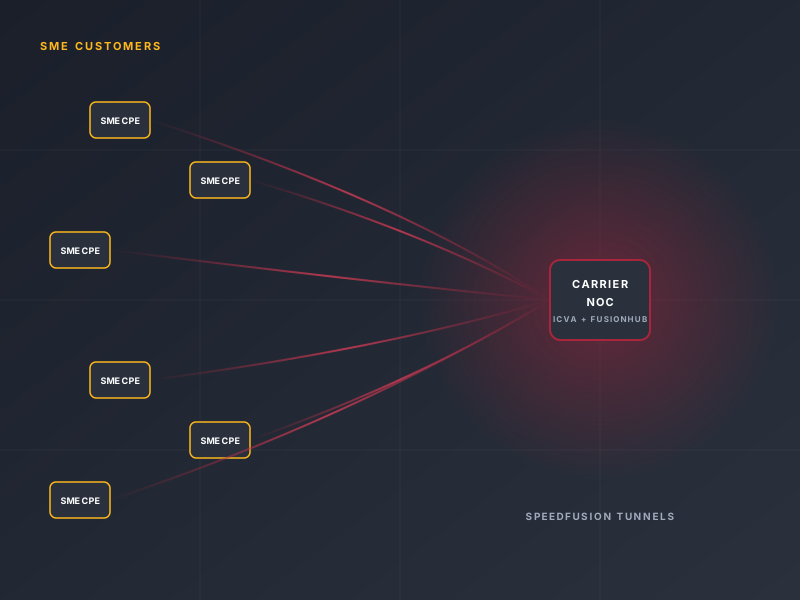
Sell managed SD-WAN to your SME customers under your own brand. Peplink CPEs (BR1 / B One / Balance) ship to each customer site. InControl Virtual Appliance (ICVA) and FusionHub are hosted on-premise in your datacentre — your customer data never leaves your infrastructure. You add MRR per CPE; Securna engineers the platform and the integration.
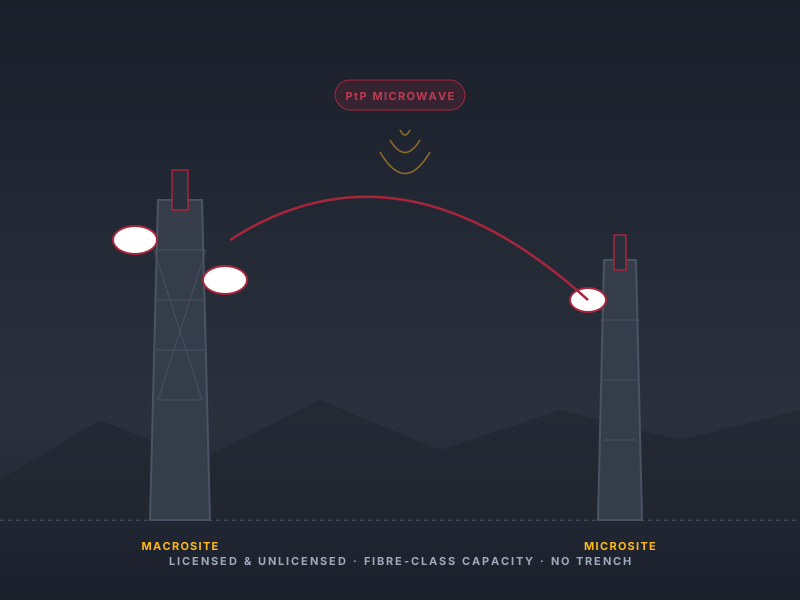
Macrosites and microsites that need fibre-class capacity without the trenching. Long-range microwave PtP and PtMP, licensed and unlicensed spectrum, mesh topology that self-heals around outages.
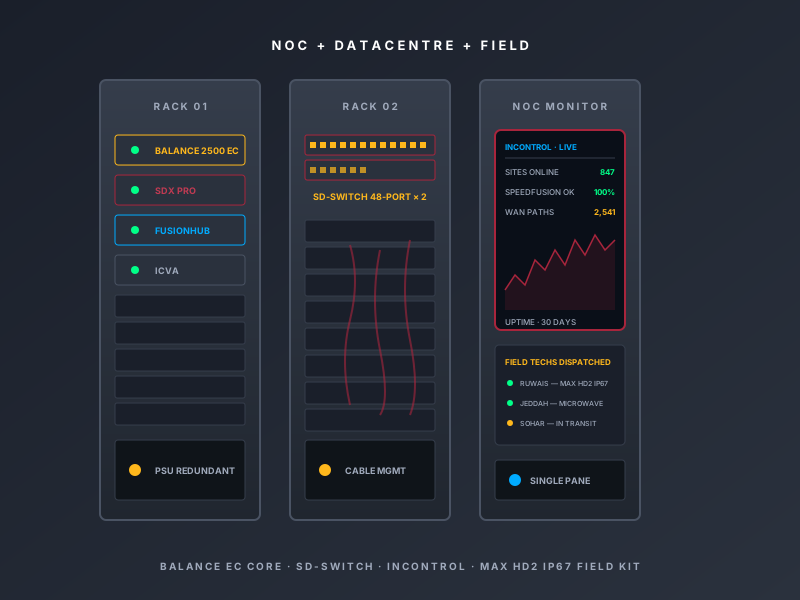
The connectivity behind your own network operations. SpeedFusion VPN from NOC to the field, InControl as the single pane across towers and engineering kits, Balance routers in the datacentre with hardware HA.
Carriers and ISPs care about reach, resilience and visibility. The kit Securna deploys delivers on all three — and it's the same stack that runs across our industrial and public-safety estates.
Long-range microwave PtP and PtMP. Anywhere Networks links extend the carrier's coverage map by kilometres, with licensed-spectrum capacity at fibre-class throughput. Securna designs, installs and supports them across the GCC.
Sub-second Hot Failover. When a primary link drops, traffic shifts to a healthy WAN inside the same TCP/UDP session. Customer-facing services don't notice. Carrier SLAs stay green. NOC alerts don't escalate to refunds.
Every tower, every CPE, every NOC link. InControl gives carrier ops a single dashboard across all Peplink kit — push config, audit health, monitor throughput, dispatch field techs with confidence. Multi-tenant if you're an MSP serving multiple operators.
Bonding is provided by Peplink's SpeedFusion technology. Satellite integration via Peplink × Starlink.
Peplink for routing and management, Anywhere Networks for long-range backhaul — both stocked in the GCC and supported by Securna's engineering team.
/Family Photos/Balance Family Photo.png)
Rackmount multi-WAN SD-WAN routers for carrier NOC, datacentre core and large central sites. Up to 8× WAN ports, multi-gigabit throughput, BGP, redundant power, hardware HA.
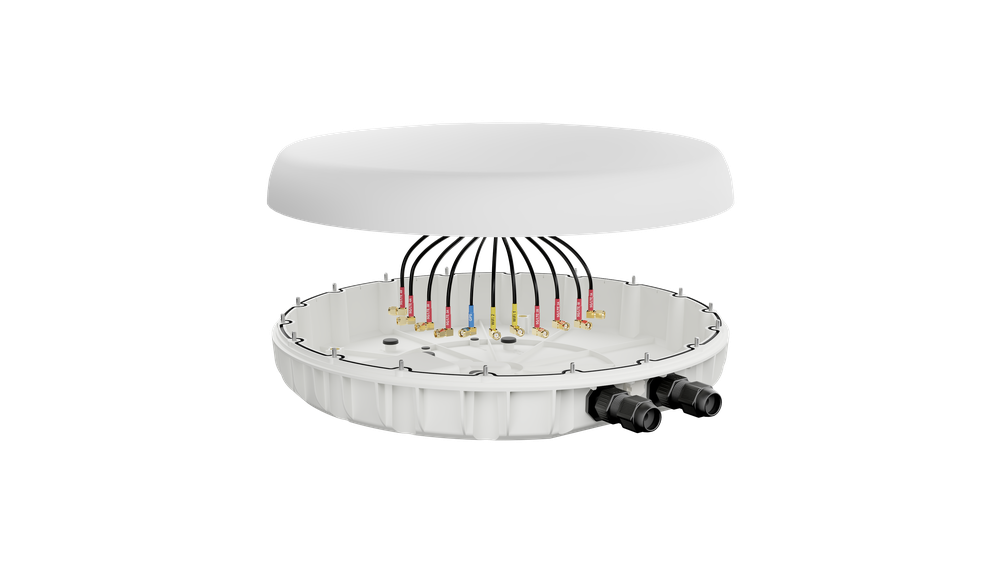
Router and antenna in one weather-sealed enclosure. The BR1 Pro mounts inside the Antenna MAX housing so the install is one unit, one cable run, one mounting bracket. Designed for tower bases, rooftop microsites and exposed cell-site cabinets where running RF cables through a wall isn't an option.
/Family Photos/B One Family Photo.png)
Compact router with embedded 5G for ISP subscriber CPE — homes, branches and remote-office endpoints. Primary cellular or wireless with multi-WAN failover, managed at scale through InControl.
Private LTE / 5G inside refineries, mines and industrial estates.
Substation comms, smart-grid telemetry, OSS / BSS to field assets.
Dedicated carrier networks for first responders — FirstNet-style mobility.
Onboard connectivity for trains, fleets, transit — bonded multi-carrier.
If you're a carrier, two conversations are likely. The MSP route: how big is your SME book, what management software do you have today, where would you host ICVA and FusionHub. The infrastructure route: which tower sites can't get fibre, which NOC links need a redundant path, where the SLA risk lives. Either one ends in the same place.